What Does it Take to Win a Club League Basketball Championship?
Ever wonder what a Club League at LA Fitness is all about? Check out how to get started and how you can hopefully build great friendships along the way!


Find out more about Basketball Club Leagues here.
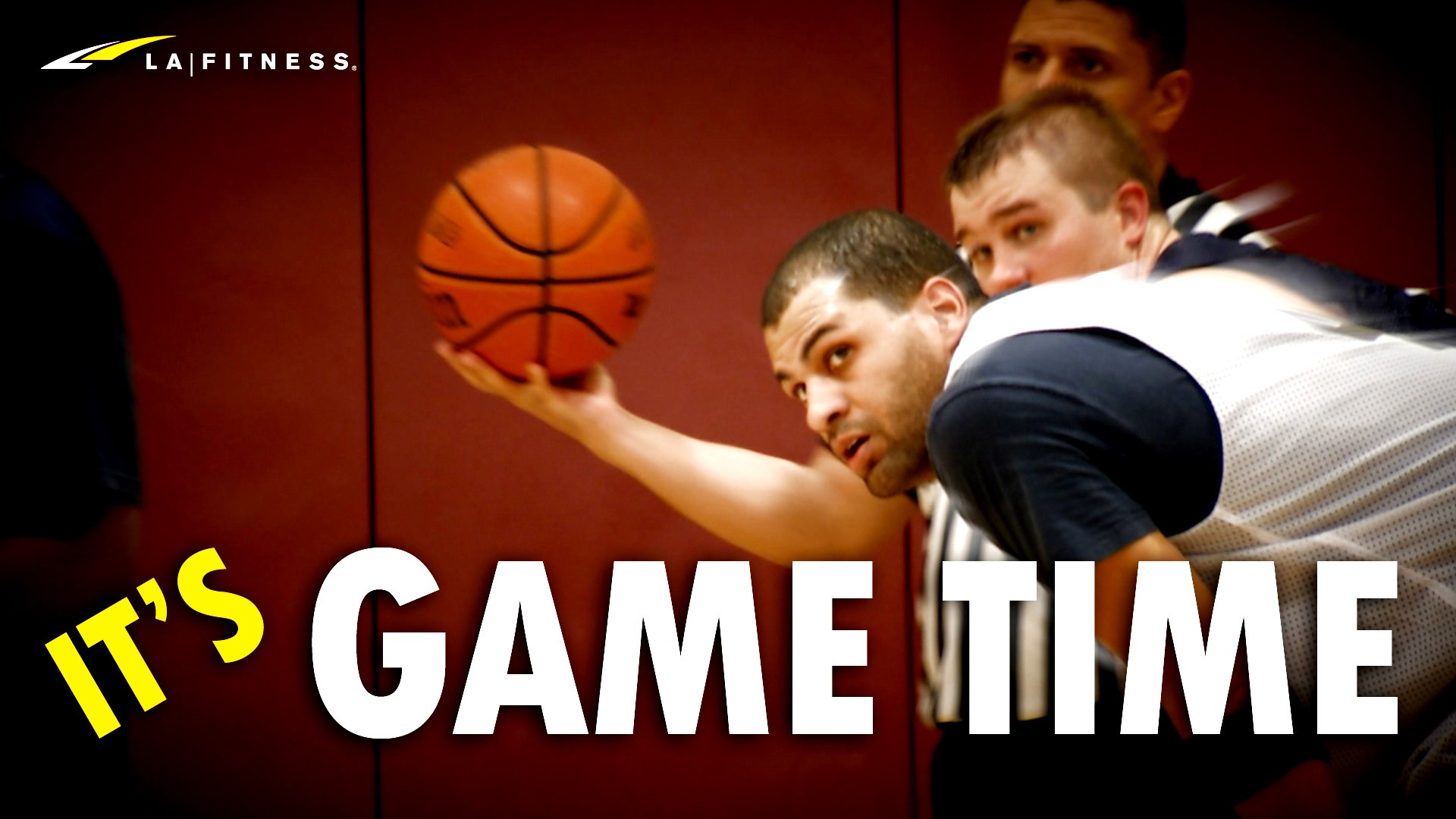
Check out all of the exciting action of the Club League basketball game below!
The sound of squeaking shoes on a shiny gym floor, the swish of the net and the feel of competition, all describe the atmosphere of a LA Fitness Club Leagues championship basketball game. What’s the winning prize? The prize is to bring home the victory of the Club Leagues championship, win a championship t-shirt and build a bond with team members that will last a lifetime.
To make it to the championship game in a competitive Club League is an accomplishment! On Thursday November 17, 2016 in Irvine, CA two teams squared off in a thrilling championship game. Both the Gold team and the Blue team played hard, but only one team came out victorious.
To start the game, the Gold team led on a high note by scoring a 3-pointer & 2 free-throws early in the game. As the first half concluded, the Blue team came back and took the lead 28 to 26.
In the second 20-minute half, the Gold team narrowed the margin with a few free-throws and took the lead 43 to 41. The competition was fierce and the score continued to go back and forth in the second half. Ultimately, the game came down to the wire, with the Blue team winning the game 60 to 58!


Want to hear more? Subscribe to get Living Healthy right to your inbox!
Both teams put in an extraordinary amount of effort to reach the last game of the season. In the end, it is not always about winning or losing, it is about developing a bond with your teammates and living a healthy lifestyle.
“One of my best experiences in Club Leagues has been meeting the cool people on my team and playing the game of basketball, teaching some about the game if they don’t know already,” said Kenny W., member of the Gold team. “The team has improved in a lot of ways. Getting that team chemistry, ball movement, defense, we have just enjoyed playing together, it’s been fun.” Even though Kenny and his team didn’t walk away with the championship title, he held his head high and has been happy with his experience in Club Leagues.
Some teams spark long-lasting friendships that can ultimately lead towards a more successful team bonding experience.
“We have been playing together since the first league!” said Frank Z. of the Blue team. “About three years now, we have built relationships with everyone in the leagues, so we have all become really good friends.”
Whether your team is brand new or has been together over the years, each experience is unique, competitive and fun! “It’s always fun to compete, and I have seen a lot of the same guys throughout the years,” said Matt G of the champion Blue team. “It’s about the longevity of actually playing together and having fun with the competition.”
What’s the best part of Club Leagues? The league environment offers a new experience at the gym, you can get a workout in, make friends and set goals, not only for yourself, but for your team as well. You aren’t alone in it! “Overall, the refs are great, it’s good clean basketball. It’s a good hour we get to spend together,” stated Frank Z. of the champion Blue team.
Club Leagues offers an enjoyable way to get involved with the LA Fitness community and experience a fun and healthy workout. In Club Leagues basketball, there are two 20 minute halves; making the game fast paced and competitive.
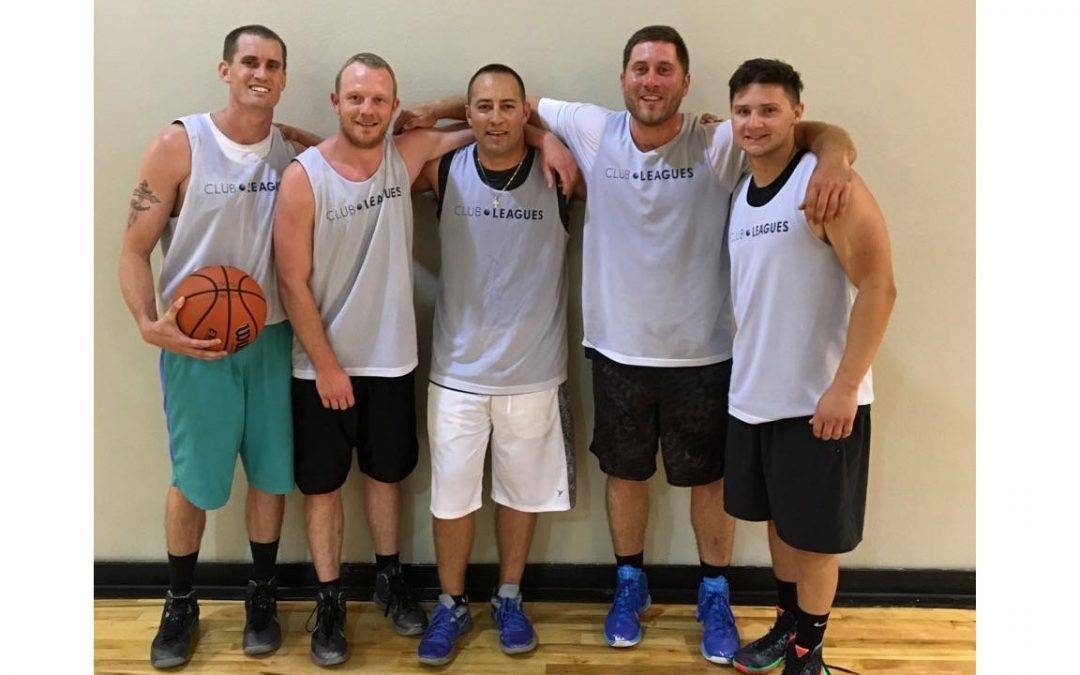
Debbie J., MS, RD contributed this article –
If you play racquetball, volleyball or basketball, then you’re no stranger to the high-intensity physical exercise required to play on the courts. Of course, each sport has its specific skills needed to play effectively, but they are similar in that they all use short burst anaerobic movements to stay fast on your feet. Compared to field sports where playing fields can consist of upwards of 5,000 square yards, racquetball, volleyball and basketball involve more agility and rapid back-and-forth play since the area of play is much smaller: Basketball; 522 square yards; Volleyball (from baseline to net) 96 square yards; and Racquetball 88 square yards.
With the stop-and-go action of these sports, the work that your muscles go through is intermittent. This is especially true for team sports with some team members sitting on the bench awaiting play and muscle recovery happens between bouts of activity. Also, there is no specific muscle group at continuous work and continuously during play (unlike distance sports); rather, varying muscles are engaged as needed for sprinting, crouching, jumping, pushing and/or swinging. This creates an underlying overall aerobic demand, which varies especially when play lasts for an hour or more at a time.
A player’s carbohydrate needs vary depending on the type of high-intensity play, duration of physical exertion and rest periods, and overall length of the game. The frequency of games impacts metabolic demands; for instance, multiple matches in one day (as in tournament competition) is one example of that requires a heavy demand of carbohydrates. Read on to find out how to fuel these needs before, during, and after playing these high-intensity sports.
Calories
Having sufficient energy to complete a competition is immensely important.
Below are the approximate number of calories burned while playing basketball, volleyball, and racquetball, calculated from The Compendium of Physical Activities (2011)1:
| Over the course of 60 minutes of play: | 160 pound person will burn approximately: | 200 pound person will burn approximately: |
|---|---|---|
| Basketball | 581 Calories | 727 Calories |
| Volleyball | 436 Calories | 545 Calories |
| Racquetball | 509-727 Calories | 636-909 Calories |
Remember to adjust depending on your weight, as well as the number of games that you might play during “league competition” up to three 60 minute games for volleyball & basketball, and up to three 15 minute games for racquetball.
A good piece of advice is to consume half the anticipated calorie need prior to the session in solid food, a quarter during exercise in the form of sports drinks and a quarter in recovery nutrition afterward.
First and foremost, you need to be in balance energy-wise for the day. It’s not a good idea to come into a game with an energy deficit and try to make up for it by eating a bunch before you play. Your stomach will agree here!
Composition
Think carbohydrates (carbs) first, then protein and fat. Whether during aerobic or anaerobic work, muscles use glycogen and blood glucose (carbohydrates) for fuel. Most studies show that ingesting carbohydrate before and during play enhances intermittent high-intensity exercise capacity.2 Though, carbohydrates are the primary nutrient used to fuel muscle work, fat may contribute in longer practice sessions and multiple game playoffs. If inadequate carbohydrate is consumed, highly specialized protein might be burned to meet energy demands. You don’t want to sacrifice protein (the main constituent of muscle) for fuel, since protein is needed for so many other functions.
Carbohydrates should be easily digestible (often called “high glycemic”) for rapid energy and replenishment. Choose low fiber starches and fruit products like pretzels, water crackers, rice, pasta, canned fruit, applesauce and bananas. Sports drinks should have about 15 grams of carbohydrate per 8 fl. oz.; and the carbohydrates should come from glucose, fructose, or sucrose. For longer matches, carbohydrates may also come from maltodextrin. Take a tip that some competitive athletes follow and consume about 30-60 grams of carbohydrates per hour during play and practice. Remember, to finish a competition with strong performance, you can’t be in a carbohydrate deficit.
Protein and fats should provide the remainder of your calories. Prior to game time, choose easily digestible protein sources such as egg whites, poultry breast, fish, soymilk/tofu, avocado and oils. If your body can tolerate dairy, yogurt is another good choice. Leave the heavy items like cheese, bacon and nuts for another time. During play, a small amount of protein (5-10 grams) in a sports drink is fine but not necessary. Postgame foods include up to 25 grams of protein in your recovery snack, bar or shake.
If you’re fueled and ready to play racquetball, volleyball or basketball, check out a list our available LA Fitness Club Leagues.
References
1. “2011 Compendium of Physical Activities: A Second Update of Codes and MET Values.” Ainsworth BE, et al. Medicine & Science in Sports & Exercise. 2011; 43:1575-1581. Basketball, game 8.0 METs (Taylor, Jacobs et al. 1978); Volleyball 6 METs; Racquetball 7-10 METs (Kcal/kg/hr)
2. “Acute effects of carbohydrate supplementation on intermittent sports performance.” Baker LB, Rollo I, Stein KW, Jeukendrup AE. Nutrients. 2015; 7(7):5733-5763.

Ever wonder what a Club League at LA Fitness is all about? Check out how to get started and how you can hopefully build great friendships along the way!

Debbie J., MS, RD contributed this article – If you play racquetball, volleyball or basketball, then you’re no stranger to the high-intensity physical exercise required to play on the courts. Of course, each sport has its specific skills needed to play effectively,...