What Dark Chocolate and Almonds Can Do for Your Health
November 7th was National Bittersweet Chocolate and Almonds Day! We’re breaking down why they’re good for you and how much you should eat to enjoy the benefits.


November 7th was National Bittersweet Chocolate and Almonds Day! With this tasty treat still on everyone’s mind, let’s talk about what has been learned about the benefits of this bittersweet indulgence. Perhaps because researchers just wanted to prove that chocolate can be healthy, the work has been done to study its nutrients and their effects on the body.
By now, you may already know some of what they have unearthed. First and foremost, that bittersweet chocolate, that is at least 65% cacao, wins the nutrition battle over milk chocolate. In case you haven’t heard, or if you’d like to know more, allow us to give you a few reasons why you should add some dark chocolate (and almonds) to your snack drawer.
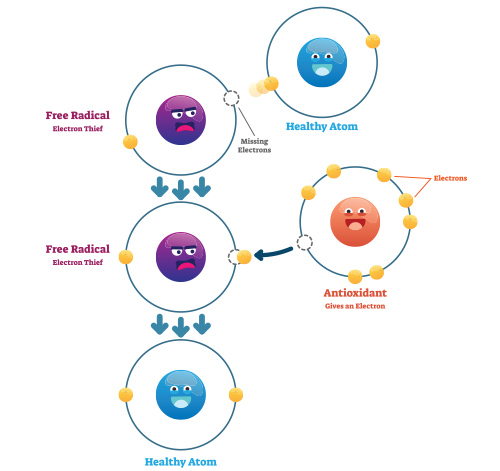
Antioxidants are those agents that help shield your body from free radicals. Free radicals are molecules that can cause cells to lose their ability to function normally.1
Essentially, free radicals hang out in your body with only one electron. Electrons like to be in pairs, so these free radicals seek out healthy atoms in your body to steal one of their electrons. When those healthy atoms lose an electron to a free radical, this causes damage to it.
Antioxidants help by giving free radicals the electron they need so they don’t steal it from other cells.
A study comparing cocoa powder and dark chocolate with super-fruit powders and juices found that the former had the same, or significantly larger, amounts of antioxidants and flavanols!2
The article explains that cacao powder successfully competes with or outperforms the antioxidant power of blueberry, cranberry, and pomegranate powders.2 It’s pretty nice to know that cacao seeds qualify as a super food!
We should back up a bit here, however, because you might be wondering what flavanols are and why you need them.
Flavanols are interesting because, according to a chocolate-making company called Ombar, they are actually very mildly toxic! This toxicity, however, prompts your body to produce more of its own antioxidants.3 This might be why chocolate is able to pack such a healthful punch. Not only does it contain antioxidants, it also stimulates your body’s natural production.
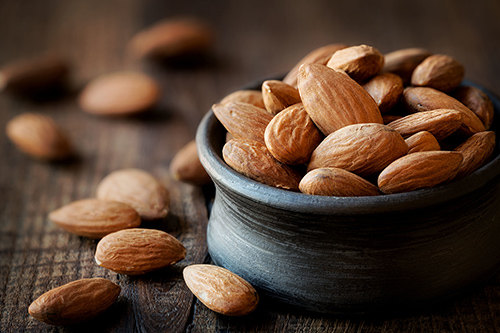
As for almonds, eating them with the skin will get you more antioxidants than eating almonds without the skin.4 You can enjoy them roasted or raw, but the key is in that outer protective layer. Next time you reach for a bar of dark chocolate, choose one that contains unskinned almonds.

The flavanols in dark chocolate are partly responsible for the lowering of your blood pressure,2 while magnesium is behind this benefit in almonds.5 Fortunately, almonds contain 20% of your recommended daily intake of magnesium.5
In dark chocolate, the antioxidants may help your body use its insulin more efficiently, and as a result, this can help lower your blood sugar.6 In almonds, magnesium comes back to play another role. It happens to help control your blood sugar by increasing your insulin sensitivity.5
A study on cocoa’s effects on platelet activation and function concluded that cocoa had “an Aspirin-like effect” on blood.7 Almonds, which are naturally high in Vitamin E, have a blood-thinning effect for this reason.8

A study was conducted to measure the brain’s responses to cognitive tasks after eating flavanol-rich cocoa. The most notable conclusion drawn from this study was that the cocoa significantly increased blood flow to gray matter in the brain.9 The study suggests that this means cocoa flavanols have the potential to aid in the treatment of strokes and dementia.9
Almonds, on the other hand, can help protect the brain from age-related memory problems and neurodegenerative diseases.10 This is because they contain nutrients like tocopherol, folate, mono- and poly-unsaturated fatty acids, and polyphenols. In separate studies, these nutrients have “shown promise as possible dietary supplements to prevent or delay the onset of age-associated cognitive dysfunction.”10
While technically these neurological effects have been observed by researchers, it’s still wise to take this information with a grain of salt. There is not enough information to prove that eating dark chocolate or almonds will improve your brain function by statistically significant numbers.
We think this information just goes to show that what your body needs can be found in an assortment of natural foods and ingredients, whereas highly processed foods strip most of those benefits away.

We’d like to say, after learning the many benefits, that we can eat as much dark chocolate and almonds as we’d like. Unfortunately, we’re too aware of the truth in the statement that “it’s possible to have too much of a good thing.”
Looking closer at what we’ve shared with you so far, you may notice that all the benefits of dark chocolate lie in the cocoa powder. The other ingredients in your chocolate bar, like sugar, sodium, and saturated fat, do more harm than good in large amounts.
The recommended portion of dark chocolate that allows you to reap the benefits and avoid too much of those other ingredients, is about an ounce and a half per day.11 That’s about half or 1/3 of a standard chocolate bar.
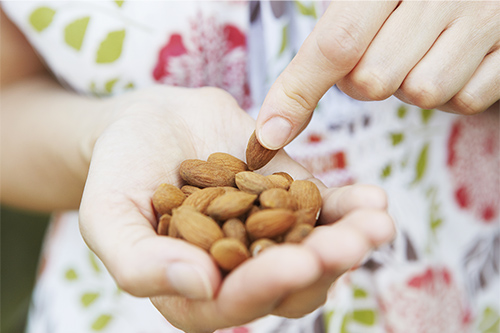
As for almonds, the recommended portion is about one ounce, or 23 kernels.12 Because almonds are high in calories, fat, and fiber, eating too many can lead to weight gain as well as gastrointestinal problems from the excess of fiber. So, make sure you’re drinking plenty of water if you’re planning on having more than a small handful.
For more healthy snacking ideas, read our Super Snacking Guide. Or, listen to our podcast on How to Read a Nutrition Label to prepare yourself for your next grocery trip. To access our monthly blog post highlights, subscribe to our newsletter today!
Sources:


I usually work out at 6 or 7 am and I want to know if it’s better to eat breakfast before or after working out. If it’s after what should I eat before working out? Thank you for your help
– Santiago C.

Optimal eating before and after a workout is all relative to the type and extent of your morning training. Some research points to greater fat burning performing cardio in a fasted state. Yet everyone seems to have a different eating schedule that works for them. Do you feel energized by a light breakfast ahead before working out or does it leave you feeling dull? Are you ravenous after working out or do you not register any hunger then?
BEFORE (approx. 30 minutes prior)
Since you don’t have the 3-4 hours ahead of time for a full meal, you can focus on a quick energy boost to restore glycogen and prime blood sugar for working muscles. If you don’t tolerate food well first thing in the morning, choose a simple carbohydrate source such as a cup of applesauce or single serving of graham crackers/pretzels with a cup of water. Move up to a mini meal of one egg plus a slice of bread and glass of milk if you feel better with solids in your system. You can also blend up a breakfast smoothie with Greek or skyr yogurt, cracked flaxseed, berries and banana.
DURING
Don’t forget about the opportunity to consume some nutrition during physical activity. For an intense exercise bout that lasts at least an hour you may consider sipping on a glucose-electrolyte beverage, aka traditional sports drink. These provide simple sugars for energy and potassium and sodium for muscle contractions and nerve impulse stimulation, as well as hydration for temperature regulation and nutrient processing.
AFTER (within 30 minutes following)
Immediately you can eat a granola-type bar you’ve packed in your locker bag or grab a protein shake from the juice bar to start off your recovery. This time is critical to nourishing your body for the whole day. Now’s the time for a heartier meal (e.g. oatmeal, lean turkey sausage and grapefruit) or a healthy breakfast wrap of eggs, spinach, feta, salsa and wheat tortilla. Choose foods with some protein and complex carbohydrate – a little fat is okay, too!
– Debbie J., MS, RD
This article should not replace any exercise program or restrictions, any dietary supplements or restrictions, or any other medical recommendations from your primary care physician. Before starting any exercise program or diet, make sure it is approved by your doctor.
Some questions have been edited for length and/or clarity.
 Have a nutrition question? Our registered dietitian is ready to help!
Email nutrition@lafitness.com or submit your question below and it may be featured in an upcoming article!
November 7th was National Bittersweet Chocolate and Almonds Day! We’re breaking down why they’re good for you and how much you should eat to enjoy the benefits.
Debbie James, RDN, helps answer a reader’s question on breakfast and working out.

LA Fitness registered dietitian, Debbie James, discusses the role cinnamon plays on lowering blood sugar in response to a member question.
I am interested in lowering my blood sugar. Does taking cinnamon help?
– Marc W.
Just taking a supplement of an herb or spice is not a recommended treatment for lowering blood sugar.
In 2013, the American Diabetes Association indicated a lack of evidence to support the use of cinnamon for the treatment of diabetes.1 An article in Medical News Today noted that research is mixed yet suggests “cinnamon may help fight some symptoms of diabetes.2” The Diabetes Council indicates that the evidence to support the use of cinnamon to lower blood sugar levels is currently not strong.3
Overall, cinnamon may be a useful adjunct therapy tool for some people but is not a replacement for traditional diabetes treatments. Consult with your healthcare provider before trying any unprescribed diabetes remedies.
Sources:
– Debbie J., MS, RD
This article should not replace any exercise program or restrictions, any dietary supplements or restrictions, or any other medical recommendations from your primary care physician. Before starting any exercise program or diet, make sure it is approved by your doctor.
Some questions have been edited for length and/or clarity.
Have a nutrition question? Our registered dietitian is ready to help!
Email nutrition@lafitness.com or submit your question below and it may be featured in an upcoming article!
November 7th was National Bittersweet Chocolate and Almonds Day! We’re breaking down why they’re good for you and how much you should eat to enjoy the benefits.
Debbie James, RDN, helps answer a reader’s question on breakfast and working out.
LA Fitness registered dietitian, Debbie James, discusses the role cinnamon plays on lowering blood sugar in response to a member question.

How Does Working Out Correlate With Blood Sugar Management? | Diabetes
November is American Diabetes Month! Learn more about it below.
Did you know? Around 1.4 million people in the U.S. are diagnosed with either type 1 or type 2 diabetes each year. There are more than 29 million Americans living with diabetes and another 86 million with pre-diabetes.1
November is American Diabetes Month, and people around the country are putting in countless efforts to help raise money for, bring awareness to and ultimately find a cure for diabetes.
Typically diagnosed in children, type 1 diabetes is a chronic disease in which the body does not produce insulin. According to the American Diabetes Association, “the body breaks down the sugars and starches you eat into a simple sugar called glucose, which it uses for energy. Insulin is a hormone that the body needs to get glucose from the bloodstream into the cells of the body.”2
It is safe to say that insulin is a very vital part of our body’s functionality. Since the body is not producing insulin, type 1 diabetics have to somehow get insulin into their bodies. This is done by either an insulin pump, which is a portable device that directly pumps insulin into the body, or by injection. With technology advancing there are new and innovative ways to give the body insulin. To find out more about insulin intake visit the health.com insulin article here.
When people have type 2 diabetes, their body does not use insulin correctly, which is also known as insulin resistance. At first, their pancreas makes extra insulin to make up for it, but over time the pancreas isn’t able to keep up and can’t make enough insulin to keep the blood glucose levels normal.3
Luckily many type 2 diabetics can manage the disease with proper diet and exercise. But in some other cases, type 2 diabetics have to rely on taking insulin later in life due to the pancreas not being able to produce enough insulin.4
Both types can take a serious toll on the human body. This is why it is especially important for diabetics to take care of their overall health, which includes working out. So how does working out affect those with diabetes?
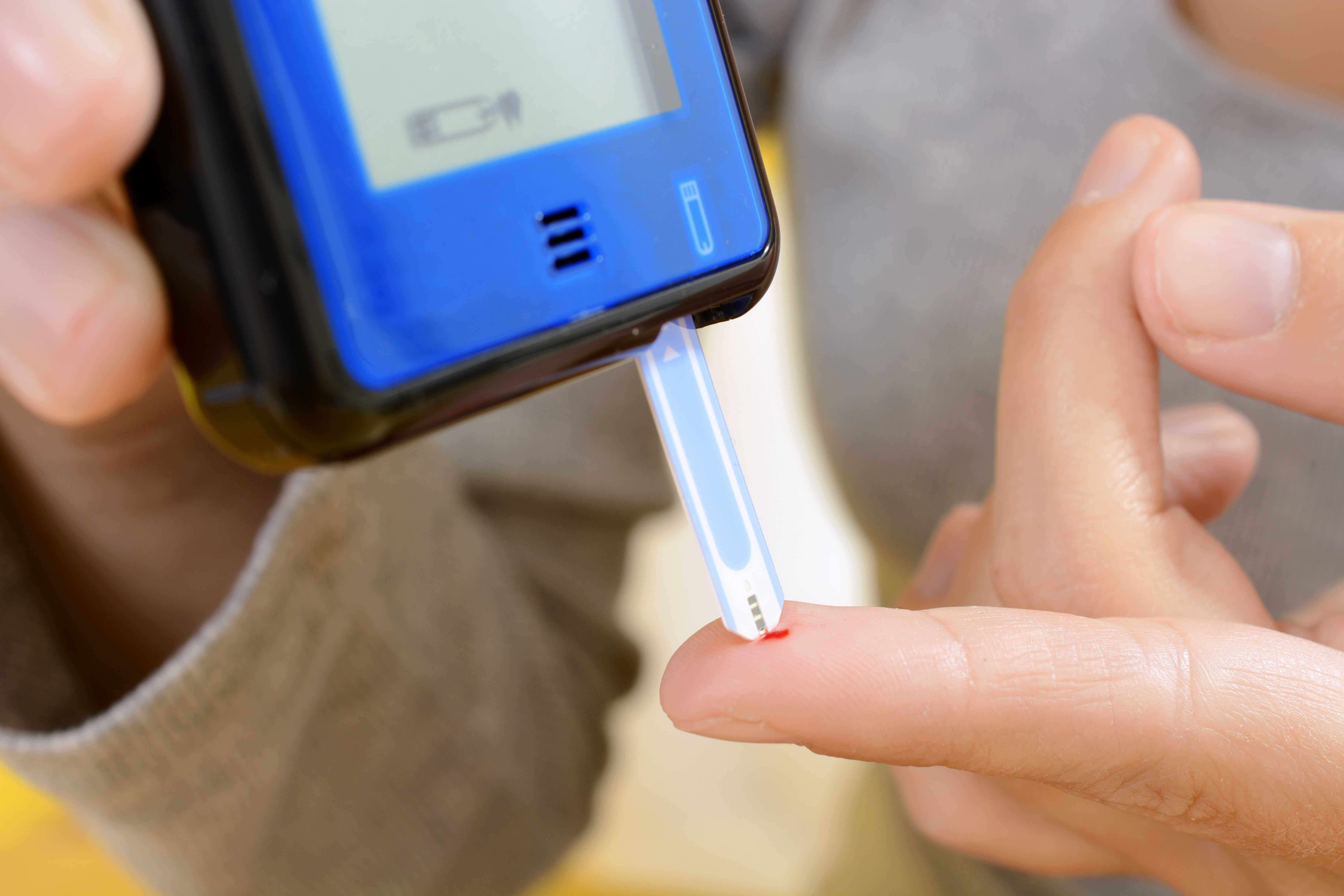
Since both type 1 and type 2 diabetes affect the body’s insulin levels, blood sugar management is important to watch and keep track of.
Studies show that exercise speeds up the metabolism in some diabetic cases, which helps keep blood sugar in control.5
For example, if you have type 1 diabetes and have high blood sugar levels, working out may help lower your blood sugar levels naturally. But it is important for type one diabetics to watch their levels because working out could make their blood sugar levels too low. A good blood sugar level is from 80 to 120, typically any higher or lower may have an effect on overall body function.6
Many type 1 and type 2 diabetics carry some sort of snack with them to help manage their levels. Plus, type 1 diabetics typically have insulin on hand for blood sugar management purposes.
If you have type 2 diabetes or are pre-diabetic, regular exercise may help reduce your body’s glucose levels, which can help make your symptoms less severe.7 With type 1 diabetics, a regular workout routine can help with overall health and blood sugar levels. But remember, if blood sugar levels are too high or too low before your workout, it is advised to wait until the levels get to normal before you start. Ways to get blood sugar levels normal vary, as some diabetics can grab a quick snack whereas others would need to adjust his/her insulin.

Working out is a great routine for anyone to get into, but for diabetics it is especially important due to the side effects of the disease. The month of November recognizes and brings awareness to diabetes and we are happy to provide a place for those who want/need to live a healthy lifestyle at LA Fitness.
If you know someone who has diabetes or if you have it yourself, let us know how exercise has helped you in your diabetic journey. For more information on the basics of diabetes from the American Diabetes Association please click here.
This article should not replace any exercise program or restrictions, any dietary supplements or restrictions, or any other medical recommendations from your primary care physician. Before starting any exercise program or diet, make sure it is approved by your doctor.

Want to hear more? Subscribe to get Living Healthy right to your inbox!
References